

What Is 3D Jewelry Modeling? Complete Guide
What 3D jewelry modeling actually means
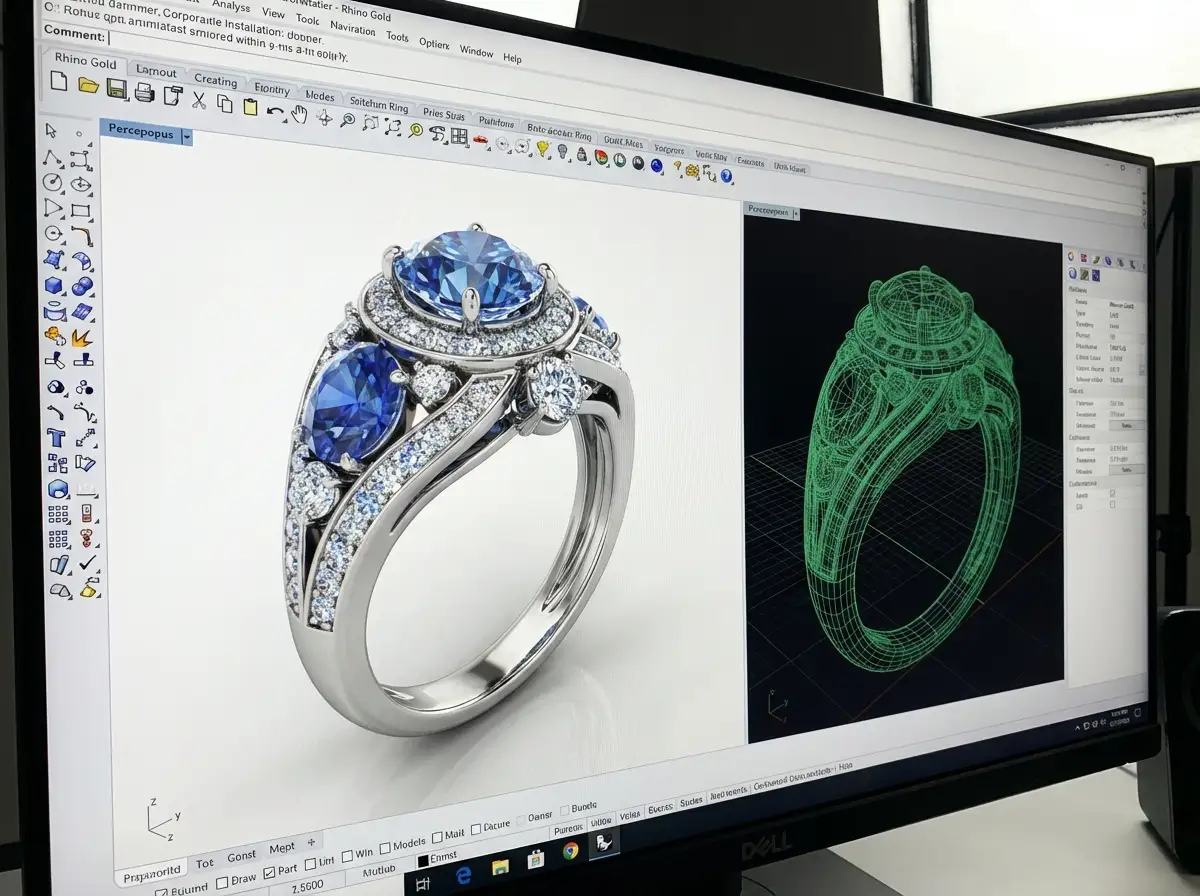
At its core, 3D jewelry modeling is the process of building a digital three-dimensional version of a jewelry piece using specialized software. Instead of relying only on flat sketches, you create a model with measurable dimensions, volume, surfaces, stone seats, prongs, wall thickness, and mechanical details.
Think of it this way. A sketch tells the story, but a 3D model tells the factory how the piece can exist in real life. That distinction is critical if you want reliable sampling and repeatable production.
How it differs from general 3D design
Many people ask, what is 3d jewelry design, and is it the same as modeling? Not exactly. Jewelry design is the broader creative process that includes concept, inspiration, proportions, material choices, and collection direction. Modeling is one technical stage within that process.
In practice, this means a designer might begin with mood boards and hand sketches, then move into design and 3d modeling for jewelry to solve technical details before a sample is made. If you want a practical look at that transition, see how to make 3d jewelry.
What a model typically includes
A proper jewelry model often includes ring size, shank width, stone measurements, seat depth, prong thickness, surface curvature, and estimated metal weight. For earrings or pendants, it may also include assembly points, hinge areas, jump ring placement, and chain attachment details.
What many people overlook is that a beautiful model still has to behave like wearable jewelry. It needs enough strength for daily use, enough clearance for stone setting, and enough logic for polishing and plating after casting.
How the modeling process works step by step
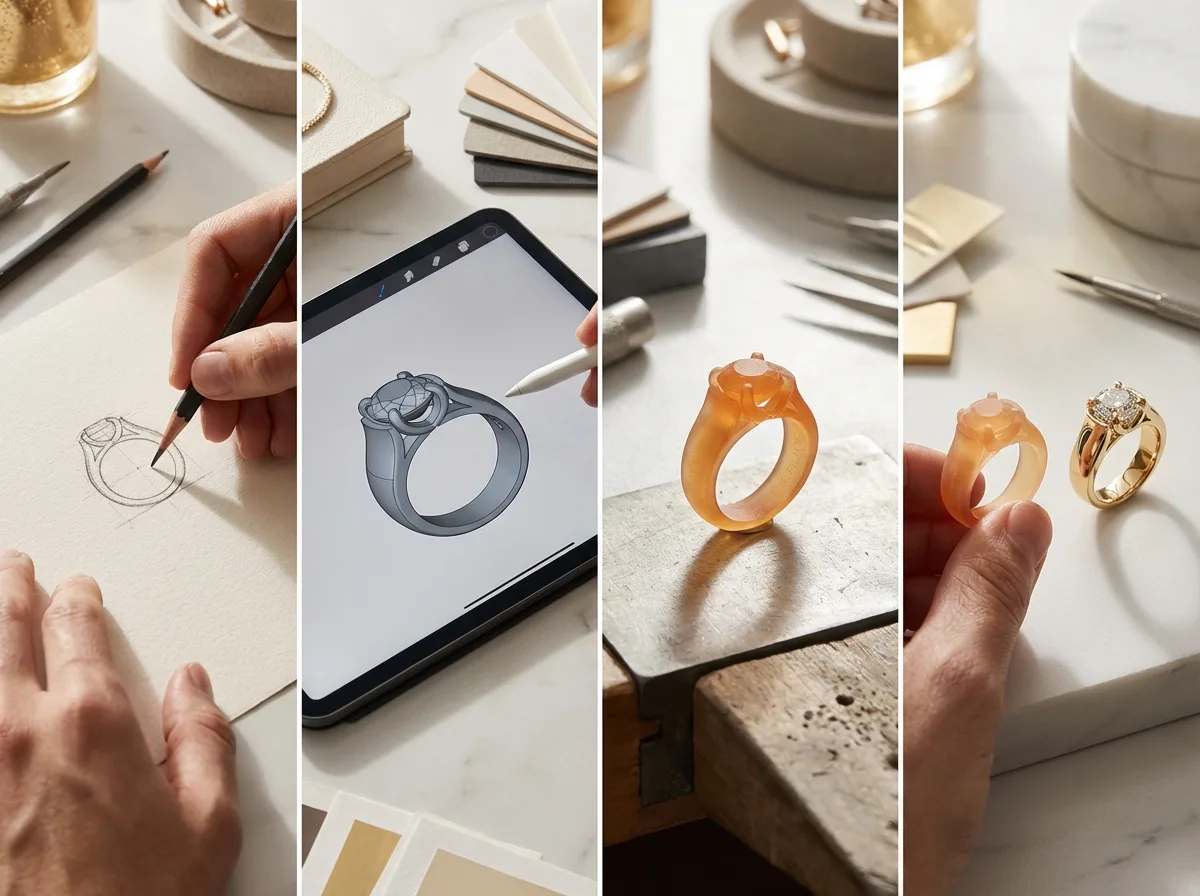
The process usually starts long before anyone opens software. A good model depends on a clear brief, and that brief should include target customer, approximate retail positioning, metal choice, stone size, product dimensions, and style references.
Step 1: Concept and technical brief
You may begin with a sketch, reference images, or even an existing bestselling style you want to refine. The modeler translates those ideas into technical requirements. If the ring must feel bold but stay within a target weight, that has to be considered from the beginning.
Step 2: Digital construction
This is where the CAD model is built. Curves, surfaces, settings, and mechanical parts are created in the software. For a 3d modeling ring jewelry project, the designer often starts with finger size and center stone dimensions, then builds the structure around them.
Now, when it comes to digital construction, precision matters more than decoration in the early stage. Fancy details can be added later, but the basic architecture must be right first. This is also why many teams review 3d model examples before approving a direction.
Step 3: File review and revision
Once the first version is ready, the team reviews renderings, measurements, and technical feasibility. A prong may need to be thicker. A halo may need more spacing. A charm hole may need to be widened because finishing will tighten tolerances.
The reality is that revisions are normal. In fact, early revisions are healthy because they save money later in prototyping and production.
Step 4: Prototype preparation
After approval, the file can be used for resin printing or wax creation, depending on the workflow. That physical prototype helps verify scale, comfort, and balance. Many brands combine digital review with a sample before confirming a full collection.
If you want to understand how digital files speed up early development, this article on How Use CAD Technology Faster Jewelry Prototyping gives useful context.
Why jewelry brands use 3D models
The biggest reason is control. When your design exists as a detailed digital file, you can test ideas earlier and communicate more clearly with your manufacturing partner.
Better accuracy and fewer misunderstandings
In traditional development, a sketch might be interpreted differently by different people. A 3D file reduces ambiguity. Stone sizes are exact. Thickness is measurable. Symmetry can be checked before casting begins.
From a practical standpoint, this reduces the back and forth that often slows down product launches. It also helps when your team is working across countries, time zones, or multiple approval layers.
Faster product development
3D modeling can shorten the path from concept to prototype, especially when you are developing multiple SKUs in a collection. Once the design language is established, variations in size, stone layout, or surface detail can often be built more efficiently.
One example is Royi Sal Jewelry, a Bangkok manufacturer established in 2001, where digital development supports brands that need clearer progression from concept to sample. That kind of workflow is especially useful when launch timing matters.
Smarter cost planning
A model can help estimate weight, highlight complicated setting areas, and reveal parts that may increase labor. That makes it easier to adjust a design before cost becomes a problem. A ring that looks perfect on paper may become too heavy in sterling silver, or too fragile in brass, depending on its structure.
Material choice affects the model as well. If you are comparing options, read about the benefits using sterling silver jewelry design and 5 benefits brass jewelry to see how different metals influence design decisions.
Software, skills, and design considerations
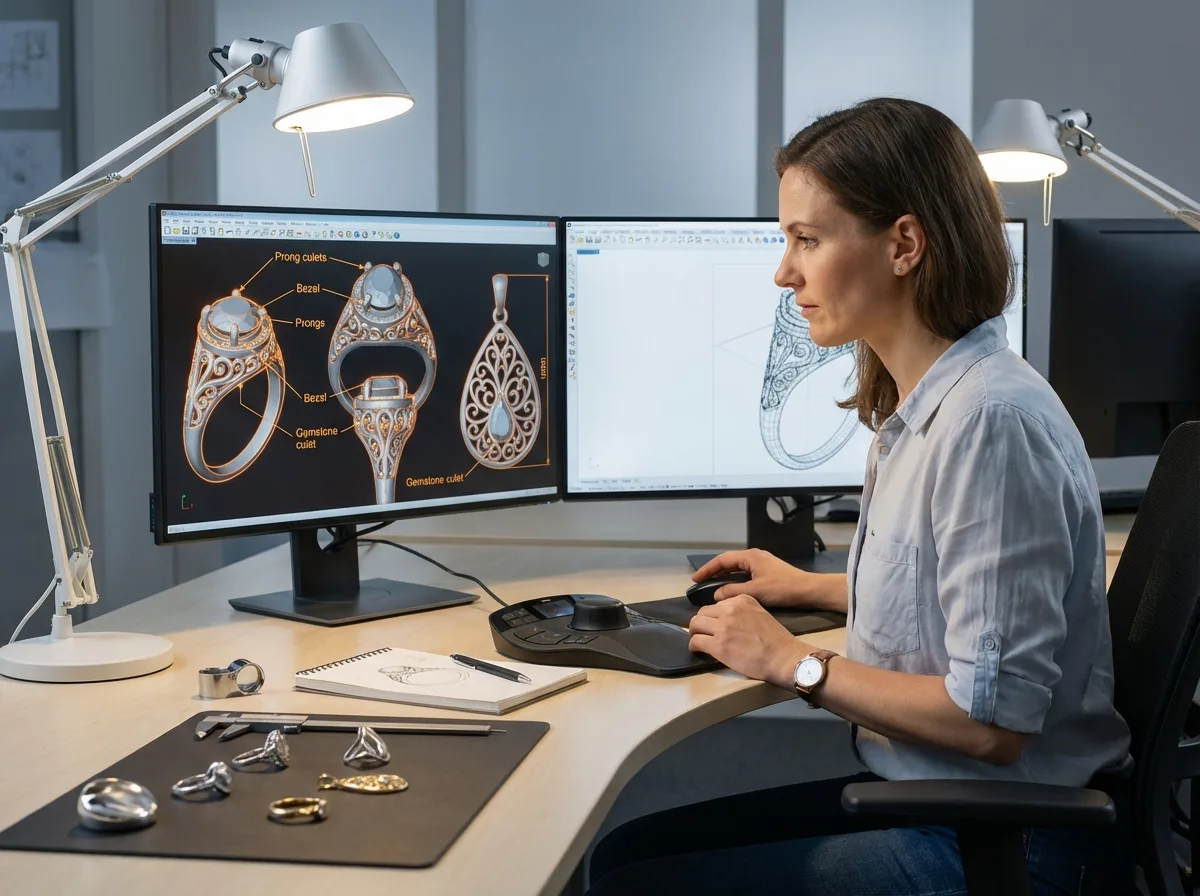
Not all software works the same way, and not all modelers use the same design logic. The best choice depends on the complexity of your jewelry, your production goals, and your team’s skill level.
Common software used in jewelry modeling
When people search for 3d modeling software for jewelry, they are usually comparing tools for precision, usability, rendering, and stone setting features. Rhino remains a common choice, especially for custom work, and you will often hear the phrase rhino 3d modeling jewelry in professional design circles because of its flexibility.
There are also plug-ins and jewelry-specific programs that simplify pavé layouts, galleries, prongs, and repetitive stone arrangements. For startups, affordable 3d jewelry modeling software can be a good learning option, but lower cost software does not automatically mean factory-ready output. The file still needs manufacturing logic.
What makes a model production-ready
A production-ready model accounts for shrinkage, casting behavior, polishing access, and setting tolerances. It also considers whether the piece can be assembled efficiently. This is where beginner models often fall short.
Consider this. A model may look elegant on screen but fail in real production because a wall is too thin, a stone seat is too shallow, or a hidden corner cannot be polished. A manufacturer with experience in Services that include CAD, sampling, casting, and finishing can often spot these issues earlier.
Do you need formal training?
If you want to build models yourself, training helps a great deal. A 3d modeling jewelry course can teach software tools, but experience teaches manufacturability. That is why some brands keep concept design in-house and rely on manufacturing partners for technical model refinement.
This also explains why jewelry 3d modeling jobs demand more than software ability. The strongest modelers understand aesthetics, stone setting, metallurgy, and production flow, not just digital shapes.
Applications in manufacturing and product development
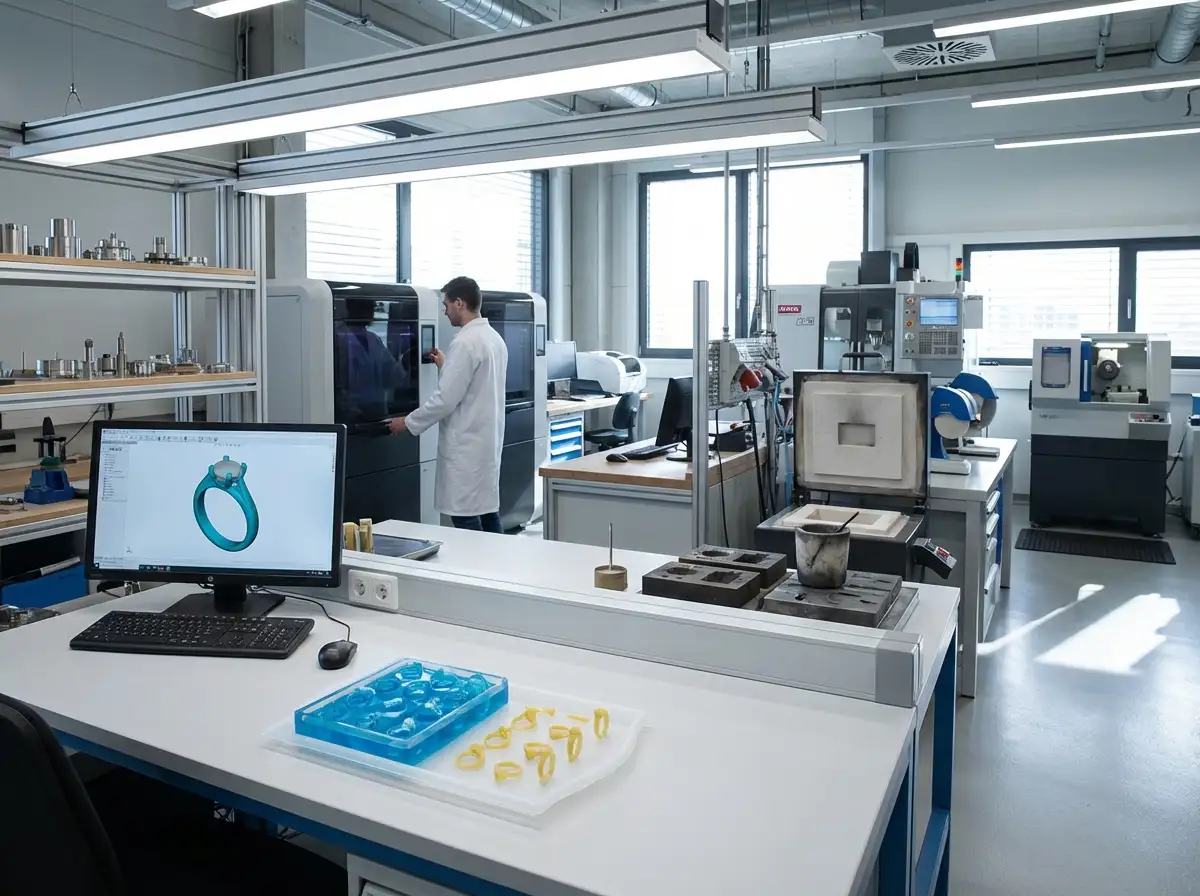
3D modeling is useful far beyond custom engagement rings. It now supports many product categories and business models across the jewelry trade.
Custom collections and OEM development
If you are building an original collection, 3D files make it easier to align your concept with the factory’s next steps. This can be especially helpful in OEM projects where your brand owns the design direction and the manufacturer handles engineering, sampling, and production.
If you need a clearer view of how a project moves from idea to sample approval, the Customer Journey page is a useful reference point. Royi Sal Jewelry is one example of a manufacturer that combines 3D CAD, prototyping, production, and custom packaging under one roof, which can reduce handoff errors during development.
Stone-intensive and detailed pieces
3D modeling is especially valuable for designs with many stones, mirrored symmetry, or precise mechanical parts. Halo rings, tennis bracelets, drop earrings, and modular charms all benefit from accurate digital planning.
In these cases, digital models allow you to test proportions and setting structure before labor-intensive work begins. That reduces the risk of expensive resampling.
Sampling and visualization
Renderings from a 3D model can also support internal reviews, line planning, and buyer presentations. They are not a perfect substitute for physical samples, but they are useful early in the process when you need fast decisions.
For a more specific look at workflow, see Royi Sals 3D Sampling Workflow. It shows how digital approval and sampling can work together rather than as separate steps.
How 3D models connect to casting and 3D printing
For many brands, the digital model is not the finish line. It is the file that moves the project into prototype making and then into casting preparation. Once approved, the model is usually converted into a printable format for resin or wax output, which becomes the basis for mold making or lost wax casting.
Here’s the thing. That handoff only works well if the digital file has been built with production in mind. Unsupported details, closed spaces that trap investment, or walls that print but cannot cast cleanly can all create problems after the design stage. This is why experienced teams do not treat printing as a separate topic. They evaluate printing and casting feasibility while the model is still being refined.
Why printability is not the same as manufacturability
A file may print successfully and still cause trouble later. A piece can look fine as a resin pattern but become risky when metal shrinkage, cleanup, stone setting, and finishing are added to the equation. The reality is that printability is only one checkpoint.
From a practical standpoint, a model should be reviewed for casting flow, joint strength, surface access, and post-cast finishing requirements. This matters even more for filigree, interlocking forms, mechanical parts, and highly detailed textures, where the design may push the limits of what can be reproduced consistently.
Where same-day visual review helps
Digital previews and quick printed models can help teams judge scale and proportion earlier, especially for rings and statement pieces where size changes the whole impression. For a startup preparing its first launch, that can make approvals faster and reduce uncertainty before ordering multiple samples.
What many people overlook is that quick visualization does not replace disciplined review. It simply gives your team better information sooner, which is exactly what good product development should do.
Common mistakes and how to avoid them
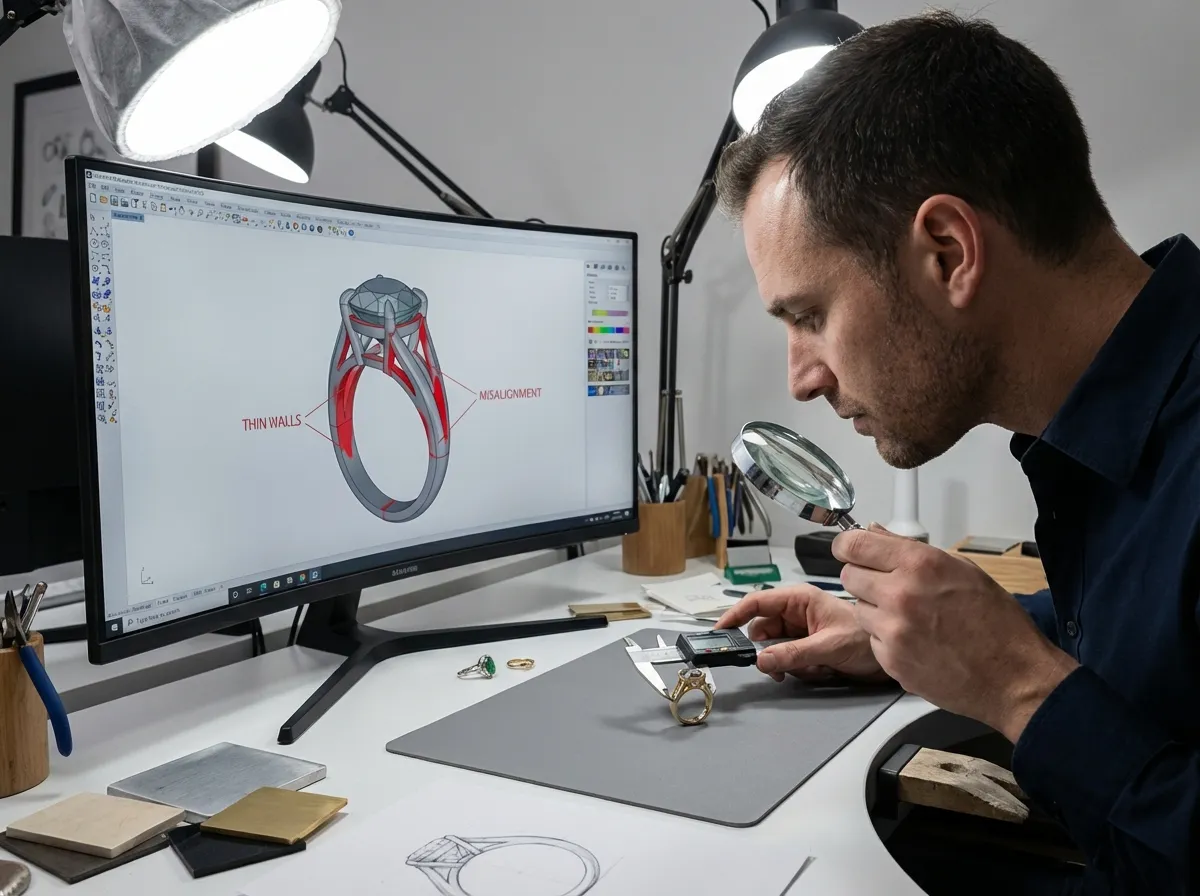
The promise of 3D modeling is strong, but it only works well when creative goals and production reality stay aligned.
Designing only for the screen
This is the most common mistake. A screen model can hide wearability issues, edge sharpness, weak joints, and unrealistic stone placement. Always review the piece as jewelry, not just as digital art.
Ignoring metal behavior
Silver, brass, and gold alloys do not behave identically in casting and finishing. If you change metals late in development, the model may need adjustment. What works in one alloy may need thicker sections or different tolerances in another.
Approving too quickly
When renderings look polished, teams sometimes approve files without checking dimensions, weight, or assembly logic. That can create avoidable delays during prototyping. The reality is that a pretty render is not the same as a production-ready design.
What many people overlook is that review discipline protects your margins. Ask for measurements, ask about stone security, and ask how the piece will be finished. Those questions matter just as much as the visual design.
Quality checks before approving a model
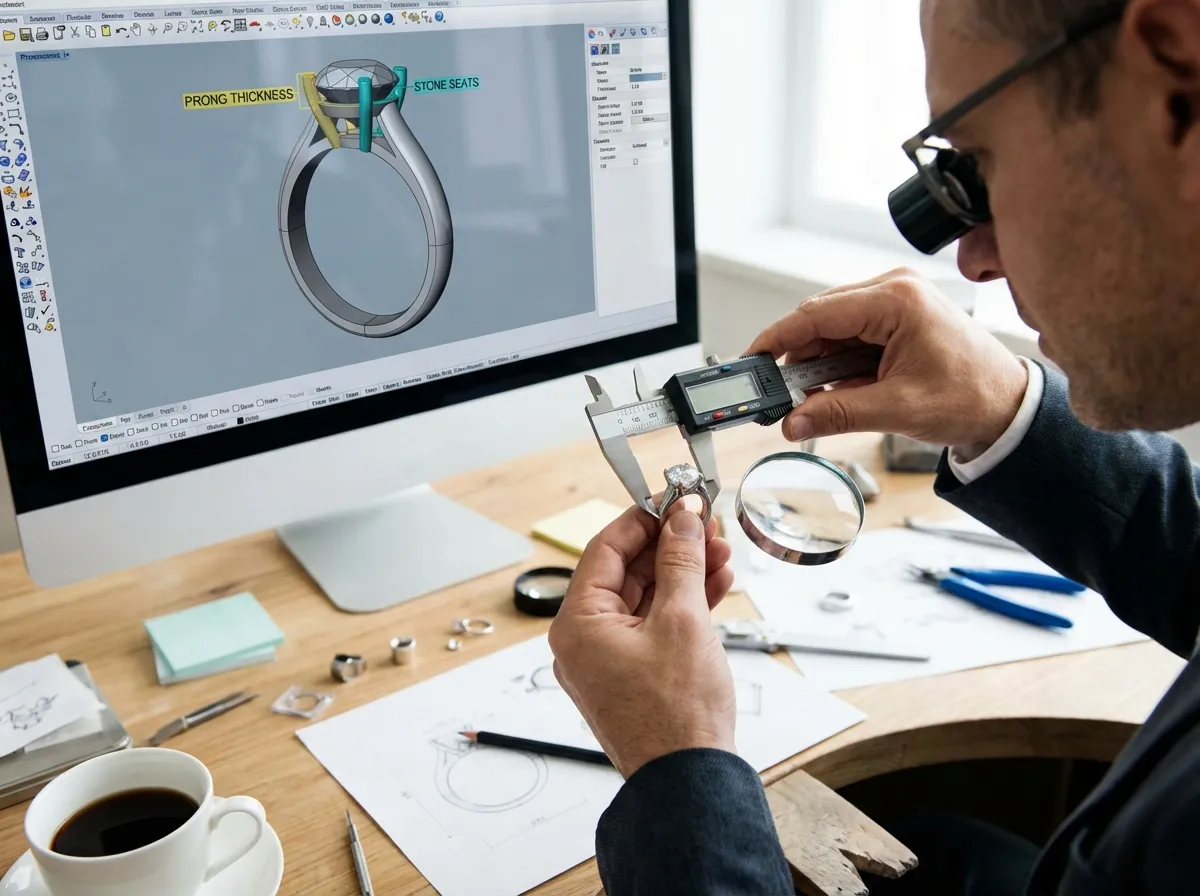
Before you sign off on a file, it helps to review it the way a factory, setter, and end customer would. This is often where a promising design becomes a reliable product.
Dimensions, weight, and wearability
Start with the basics. Confirm finger size, overall dimensions, stone sizes, and estimated metal weight. Then look at comfort. A ring may need a softer interior edge. An earring may need better balance so it does not tip forward. A pendant bail may need more clearance than expected once plating and chain thickness are considered.
Stone setting and finishing access
Now, when it comes to setting, make sure prongs, bezels, and seats leave enough room for secure work. The setter needs access, not just a correct measurement on screen. The same goes for polishing and plating. Hidden recesses, tight corners, and crowded stone layouts can slow down finishing or compromise the final result.
Assembly logic for production
Consider this. A model may be technically impressive but still inefficient if it requires unnecessary assembly steps or difficult solder points. Clasps, posts, hinges, links, and jump rings should all be reviewed as working components. If your collection includes multiple variations, this is also the stage to check whether the construction logic can be repeated consistently across the line.
Frequently Asked Questions
What is 3D jewelry modeling in simple terms?
3D jewelry modeling is the process of creating a digital three-dimensional version of a jewelry piece using CAD or similar software. Instead of showing a design only as a sketch, the model includes actual dimensions, structure, and technical details. This helps you review shape, size, symmetry, stone placement, and weight before making a physical sample. For brands and manufacturers, it is a practical tool that improves communication and reduces guesswork during product development.
Is 3D jewelry modeling the same as CAD jewelry design?
They are closely related, but not always used in exactly the same way. CAD jewelry design usually refers to the broader use of computer-aided design tools in jewelry creation. 3D jewelry modeling is the hands-on process of building the digital form itself. In everyday business conversations, people often use the terms interchangeably. What matters most is whether the file is accurate enough for prototyping, stone setting, casting, and production planning.
Why do jewelry brands use 3D modeling before production?
Brands use 3D modeling because it makes product development more predictable. You can check proportions, estimate weight, review stone layouts, and identify weak areas before investing in samples or full production. This is especially useful when you are building a new collection and need consistency across multiple styles. It also improves communication with factories, since a technical file gives clearer guidance than a sketch alone. That often means fewer revisions later.
What software is commonly used for jewelry modeling?
Rhino is one of the best-known tools in jewelry development, especially for custom and technical work. Many teams also use jewelry-specific plug-ins or software with built-in stone setting and parametric features. When evaluating software, do not focus only on price or rendering quality. Look at whether the program supports accurate dimensions, export formats, and production-friendly geometry. The best software for one business may not be the best for another, especially if your team handles both design and manufacturing review.
Can 3D modeling be used for rings, earrings, and necklaces?
Yes, and it is widely used across all of those categories. Rings are a common application because they require precise sizing, stone setting logic, and comfortable proportions. Earrings benefit from digital balancing, symmetry, and attachment details. Necklaces and pendants often need accurate bail size, chain connection, and assembly planning. The value of 3D modeling increases when a design has technical details that would be difficult to communicate through sketches alone.
Does a 3D model guarantee that the final jewelry piece will be perfect?
No, and that is an important point. A 3D model improves accuracy, but it does not remove the need for sampling, review, and manufacturing expertise. Casting behavior, finishing access, stone setting, and wearer comfort still need to be checked in real life. Think of the model as a powerful planning tool, not a guarantee. The best results come when digital design is paired with practical factory feedback and a well-managed sample approval process.
Is 3D jewelry modeling only for large brands?
No. Small brands, startups, retailers, and private label sellers use it as well. In fact, smaller businesses often benefit even more because early mistakes can be expensive when budgets are tight. A strong digital model helps you make better decisions before committing to sampling or production. If you do not have an in-house CAD team, you can still work with a manufacturing partner or freelance modeler who understands both design and production requirements.
How long does it take to create a 3D jewelry model?
The timeline depends on complexity. A simple solitaire pendant may move quickly, while a stone-heavy ring with custom galleries and multiple revisions can take much longer. The quality of your initial brief also affects timing. Clear measurements, reference images, and design priorities help the modeler work faster. In many cases, the review and revision stage takes as much time as the first build, especially if the piece is being optimized for cost or manufacturability.
What should I provide before asking for a 3D jewelry model?
Start with the clearest brief you can give. Helpful inputs include sketches, reference photos, target dimensions, stone sizes, metal preference, intended price level, and any branding or style direction. If the design is for a collection, explain how the piece should relate to the rest of the line. You do not need a perfect technical package, but the better your brief, the better the first model will be. Good input usually reduces revision rounds.
Can 3D modeling help reduce jewelry development costs?
Yes, especially by catching problems early. A digital model can reveal excess metal weight, fragile design areas, awkward proportions, and setting issues before a sample is made. That does not mean the process is free of cost, but it often prevents more expensive corrections later. For brands managing multiple SKUs or seasonal launches, this can make development more efficient and help protect margins while still maintaining design quality.
How does a 3D jewelry model move into casting?
After the file is approved, it is usually prepared for resin or wax output so a physical pattern can be made. That pattern is then used in the casting workflow. The important part is that the file must already account for manufacturing needs such as thickness, shrinkage, stone setting space, and finishing access. If those details are ignored, the casting stage can expose problems that were easy to fix earlier in the digital phase.
Can every jewelry design be modeled digitally?
Many designs can, but not every technique translates perfectly into a fully digital process. Some pieces still rely heavily on bench methods, hand assembly, special surface effects, or mixed-material details that are easier to resolve physically. 3D modeling is strongest when it helps define structure, proportion, and production logic. In some projects, the best result comes from combining digital modeling with traditional craftsmanship rather than trying to force everything into one method.
What should I check before approving a jewelry CAD file?
Review measurements, estimated weight, stone sizes, setting structure, wearability, and assembly details. You should also ask how the piece will be polished, plated, and set after casting. A render can look finished while the underlying model still has technical risks. Good approval decisions come from checking both appearance and manufacturability.
Key Takeaways
- 3d jewelry modeling turns a creative idea into a measurable, production-oriented digital file.
- It improves communication between your brand, designer, and manufacturer during sampling and production.
- Good models consider wearability, stone setting, casting behavior, finishing, and cost, not just appearance.
- Software matters, but manufacturing knowledge matters more when you want production-ready results.
- Early review of dimensions, weight, and assembly logic helps prevent expensive revisions later.
Conclusion
3D jewelry modeling has become one of the most useful bridges between creative design and reliable manufacturing. If you are building a collection, testing a new ring concept, or refining an existing bestseller, a strong digital model gives you more clarity before real money goes into sampling and production. That clarity affects more than appearance. It shapes comfort, durability, stone security, lead time, and margin.
The most successful brands treat modeling as both a creative and technical step. They do not ask only whether the render looks beautiful. They ask whether the piece can be cast cleanly, set securely, polished properly, and produced consistently. That mindset saves time and avoids frustration.
If you are exploring your next jewelry concept, get in touch to see how our team can help with development.




Responses (0)